On November 17, REWE said it is ending its Pick & Go test. Pick & Go was REWE's camera-based store concept in Germany. Shoppers took items off the shelf, and cameras recorded what they picked, so they could skip the usual checkout scan.
In the same week, Vusion made a takeover offer for Pricer, the Swedish maker of electronic shelf labels. Both stories point the same way. The tech that keeps a store running day to day is less flashy: a clear ID on every item, good item data, and scanners that read it fast. This post looks at what happened, what we know and don't know, and what it means if you run a smaller store or a retail warehouse.
What REWE said
REWE ran Pick & Go with the Israeli tech company Trigo, starting in 2021. By the end there were seven Pick & Go markets in Germany. The seventh, in Hannover, only opened in spring 2026.
Christoph Eltze, REWE Group's Chief Digital & Technology Officer, announced the end in a LinkedIn post. He said REWE had met the learning goals it set before the test. He also wrote, "The future of checkout is not determined by a single technology." REWE will now go through the results. It says it will keep testing other kinds of automated and self-service shopping, including computer vision and self-checkout.
REWE gave no business reason, such as cost or customer numbers. The reports we read also don't say what happens to the seven stores next. So we won't guess. What we can say is that a large grocer tested camera checkout for about five years and chose not to roll it out further in its current form.
How Pick & Go worked
Reports in the German press described two ways to shop. With the app, you checked in at the entrance and paid after you left. Without the app, you picked your items, went to a payment terminal, checked the list the system had built, and paid there. Cameras and sensors in the store tracked what was taken from the shelves.
That is the hard part of camera checkout. The system has to link each item to the right person, in a busy store, with no scan at all. Every product and every shelf change has to be known to the system. A barcode scan does that job in a fraction of a second, with a cheap label and a scanner that works in any store.
Four ways to check out, compared
Most stores mix several of these. Here is how they compare for a small or mid-size retailer.
| Checkout type | How items are identified | What the store needs | Good fit for |
|---|---|---|---|
| Staffed checkout | Cashier scans the barcode | POS, scanner, staff | Every store, as the base option |
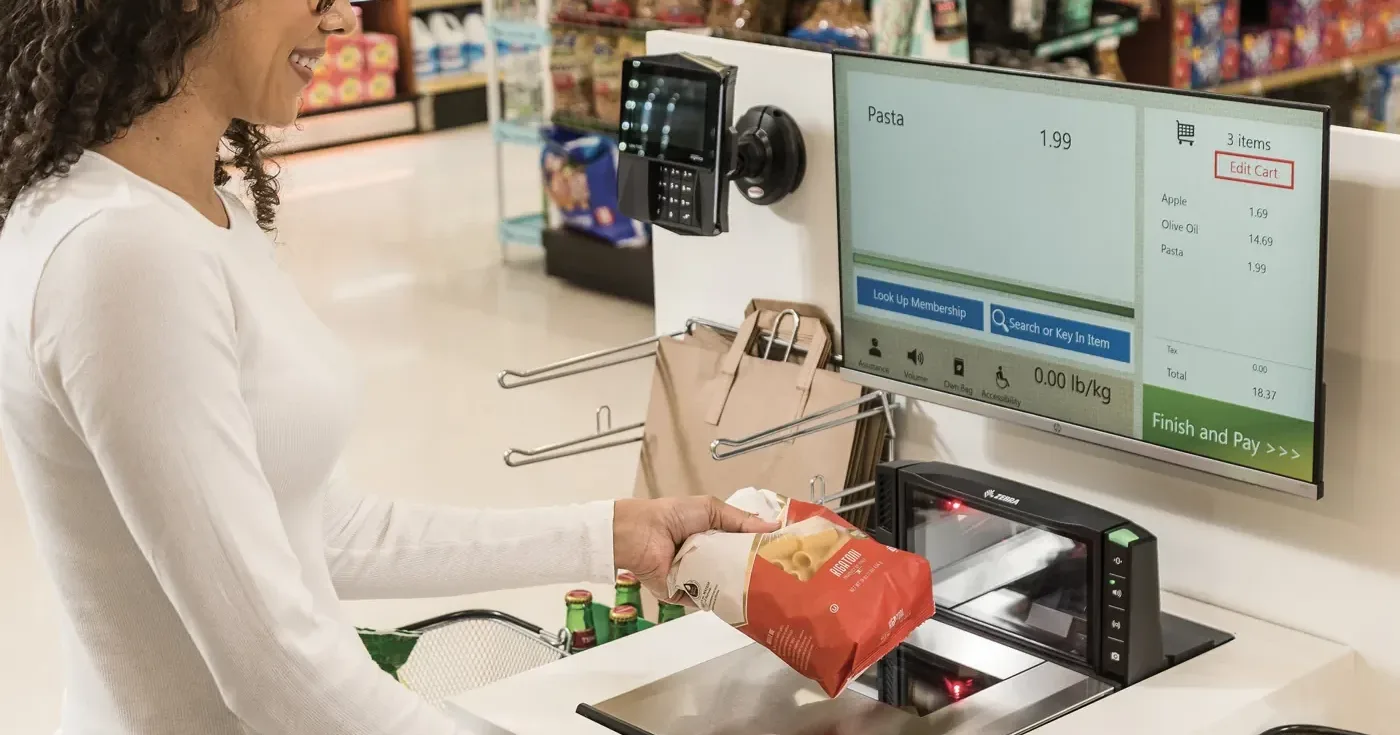
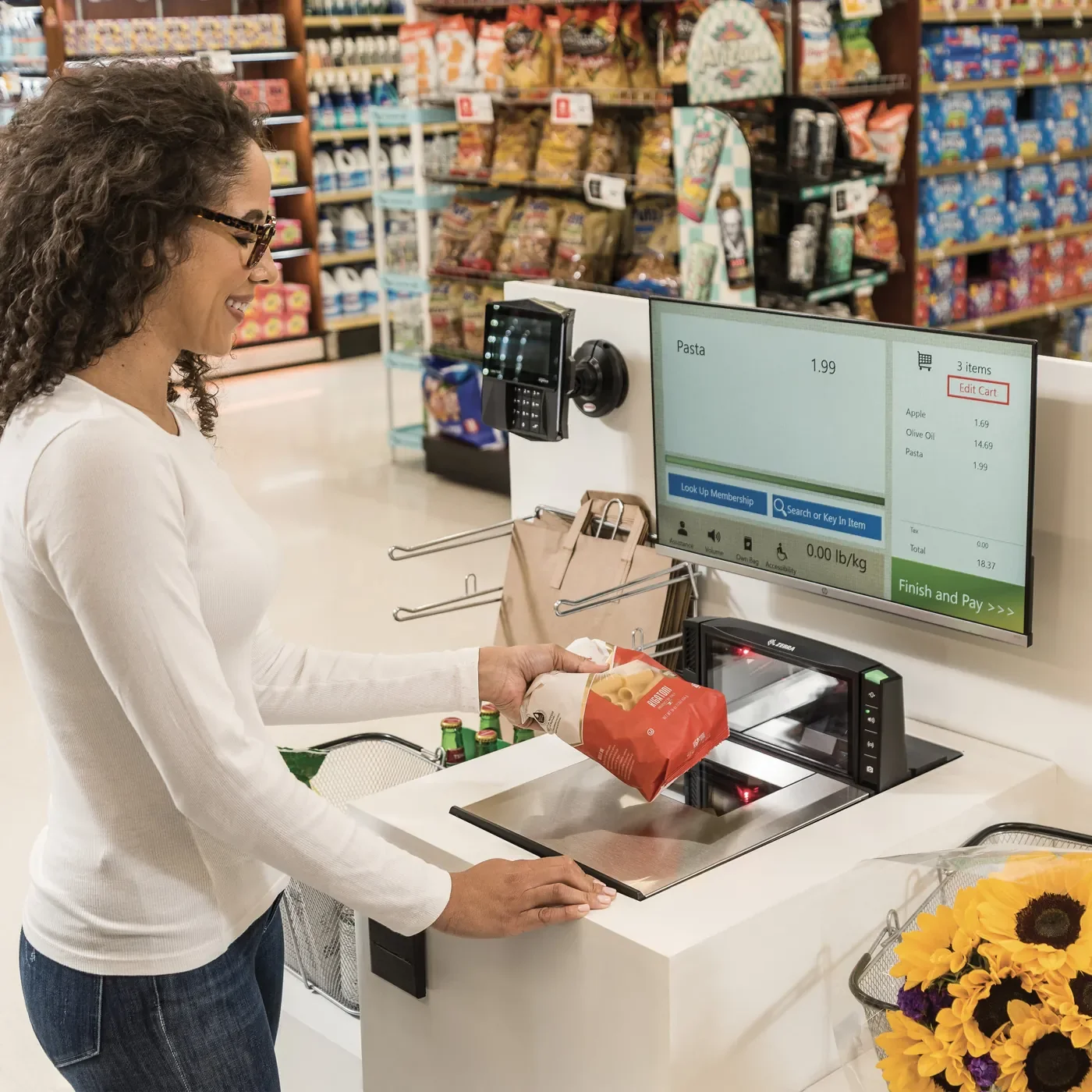
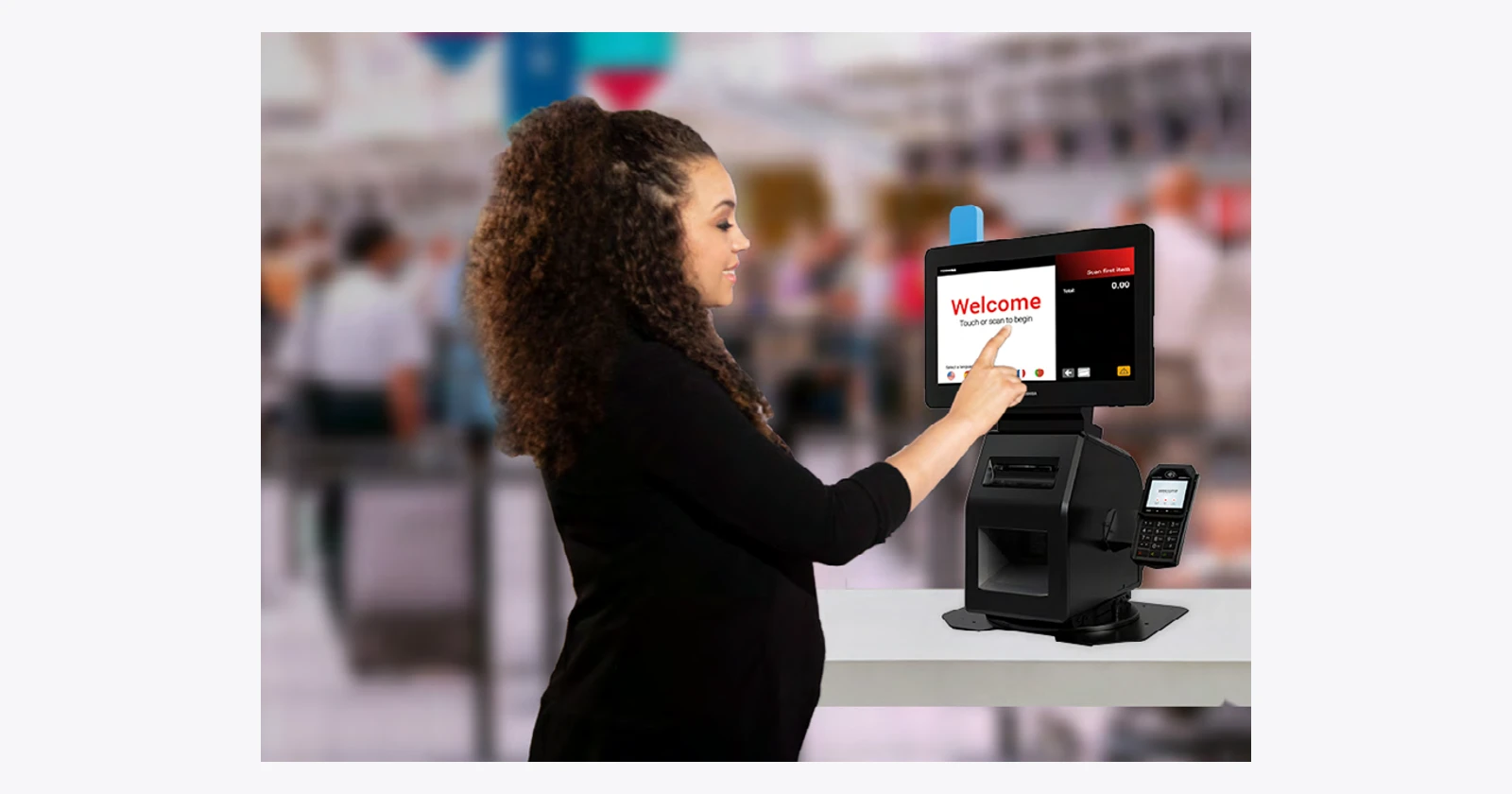
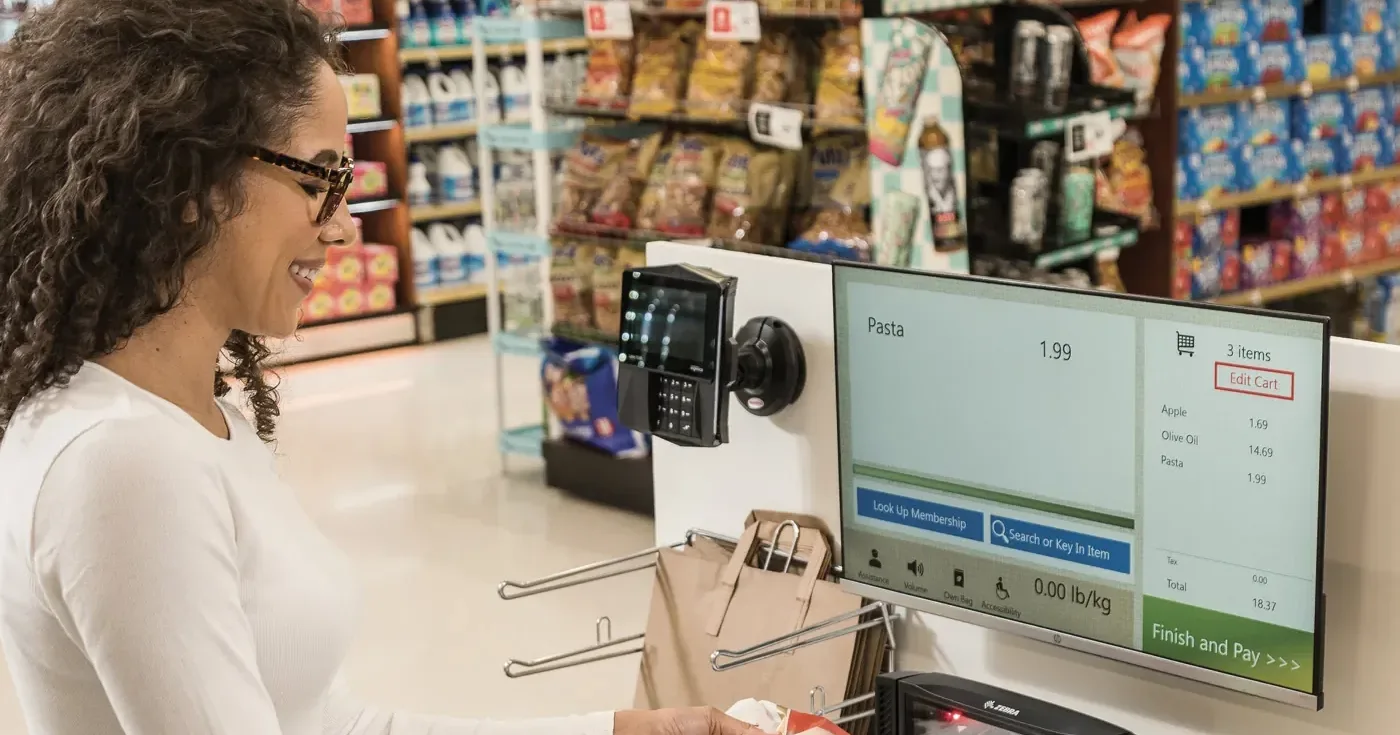
| Self-checkout | Shopper scans the barcode at a kiosk | Self-checkout stations, someone to help | Busy hours and small baskets |
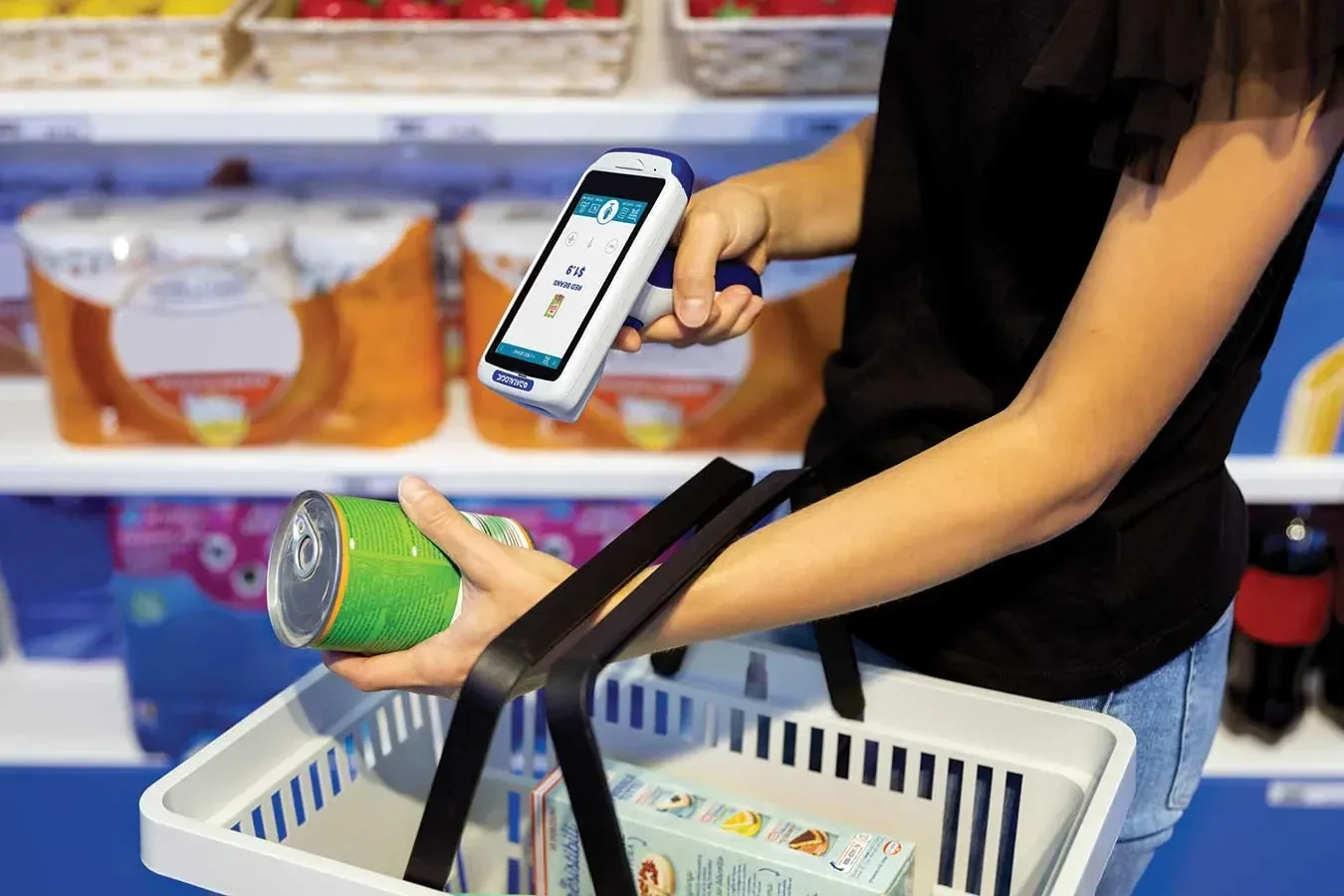
| Scan & go | Shopper scans with a handheld or phone while shopping | Handhelds or an app, spot checks | Regular shoppers and larger baskets |
| Camera checkout | Cameras and sensors, no scan | Cameras, shelf sensors, a fully mapped store | Small, controlled formats |
The first three all depend on the barcode on the product. That is also why the coming shift to 2D barcodes matters. Our post on GS1 Sunrise 2027 and 2D barcodes covers what your scanners and apps need to read them.
Shelf labels: the Vusion and Pricer deal
On November 17, Vusion announced a recommended public offer for all shares in Pricer. It offers SEK 6.00 in cash per share, which values Pricer at about SEK 980 million. Both boards back the deal. The acceptance period is expected to run from around December 8 to January 5.
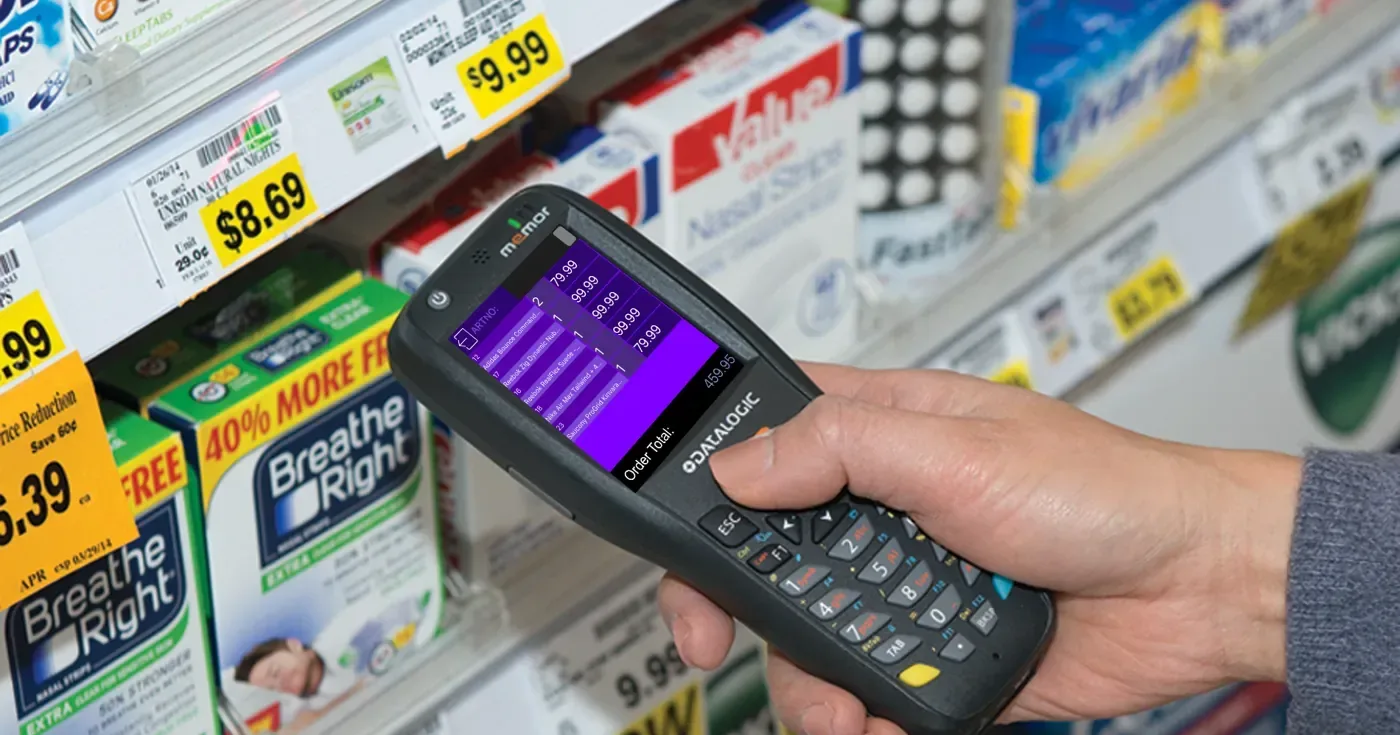
Both companies make electronic shelf labels, the small digital price tags on store shelves. For a store team, the point is not who owns whom. It is that shelf labels, POS and handheld scanners all read from the same item data. When a price changes, the shelf label, the till and the staff handheld should all agree. If they don't, you get price errors and unhappy shoppers. Our guide to the shelf label price change workflow shows how to check that with a scanner.
What this means for smaller stores
You don't need to follow every store-tech headline. But this week's news gives some useful pointers.
Keep the barcode at the center. Big grocers test many ideas, and some get dropped. The barcode scan keeps working in every format, from the staffed till to scan & go.
Clean item data pays off twice. Self-checkout, shelf labels and stock counts all fail in the same way when item data is wrong. Fix missing barcodes, duplicate items and old prices before you add new tech.
Test small, with a way back. Even a large grocer tested in a handful of stores first. At your scale, run a pilot in one store and keep a normal way to pay next to the new one.
Use handhelds for more than checkout. The same device that runs scan & go can do price checks, receiving and stock counts. See our guide to self-service store hardware and software for a full setup.
Ask what camera systems need from you. If a vendor pitches camera or vision checkout, ask how products are taught to the system, what happens when packaging changes, and who checks the errors.
How Raptool fits
Raptool makes software, not hardware. Raptool Retail gives store staff mobile apps for price checks, receiving, store transfers and stock counts, and our kiosk apps cover self-service. They run on the Raptool Client on scanners and handhelds from Zebra, Honeywell, Datalogic, Newland and others. You buy the hardware from a Raptool partner, and you can compare models on our device pages.
The apps read 1D and 2D barcodes and connect to your ERP or POS item data, so the shelf, the handheld and the till work from the same numbers.
Questions about REWE Pick & Go and store scanning
Why did REWE end Pick & Go?
REWE did not give a business reason. Its digital chief said the test had met its learning goals and that REWE will keep testing other self-service and automated checkout ideas.
How many Pick & Go stores did REWE have?
Seven test markets in Germany, built with the tech company Trigo. The first started in 2021 and the seventh opened in Hannover in spring 2026.
Is camera checkout dead?
No. REWE says it will keep testing computer vision and automated shopping. But it shows that camera-only checkout is still hard to scale, while barcode-based self-checkout and scan & go work in almost any store today.
What does the Vusion and Pricer deal mean for stores?
Not much right away. It is a takeover offer between two makers of electronic shelf labels. For stores, the lesson is to keep shelf labels, POS and handheld scanners on the same item data.
Can Raptool apps run self-scanning in a store?
Yes. Raptool retail and kiosk apps run on handhelds and kiosks from many brands and read 1D and 2D barcodes. Book a demo to see a setup that fits your stores.
Tags
Want store apps for price checks, self-scanning and stock counts on the scanners you already have? Book a demo with Raptool.
Book a demoSources: Retail Technology Innovation Hub: REWE pulls plug on its Trigo-powered Pick & Go project, November 17, 2026 · Lebensmittelpraxis: Rewe stoppt kassenlose Läden Pick & Go (German), November 17, 2026 · Retail Technology Innovation Hub: Vusion preps Pricer acquisition, November 17, 2026. Product photos: Zebra Technologies and Datalogic. Checked November 23, 2026.